How Do I Know If an Interior Designer is Trustworthy?
5 June 2026 · 5 min read
You're going to invite this person into your home, share your budget, and let them make decisions that live on your walls for years. Trust matters enormously, and a good Instagram feed tells you almost nothing about whether you can trust someone. See our completed interiors and fabrication work to evaluate us on the same standard. Here's what actually signals it.
Trust Signals to Look For
Shows completed projects, not just renders.
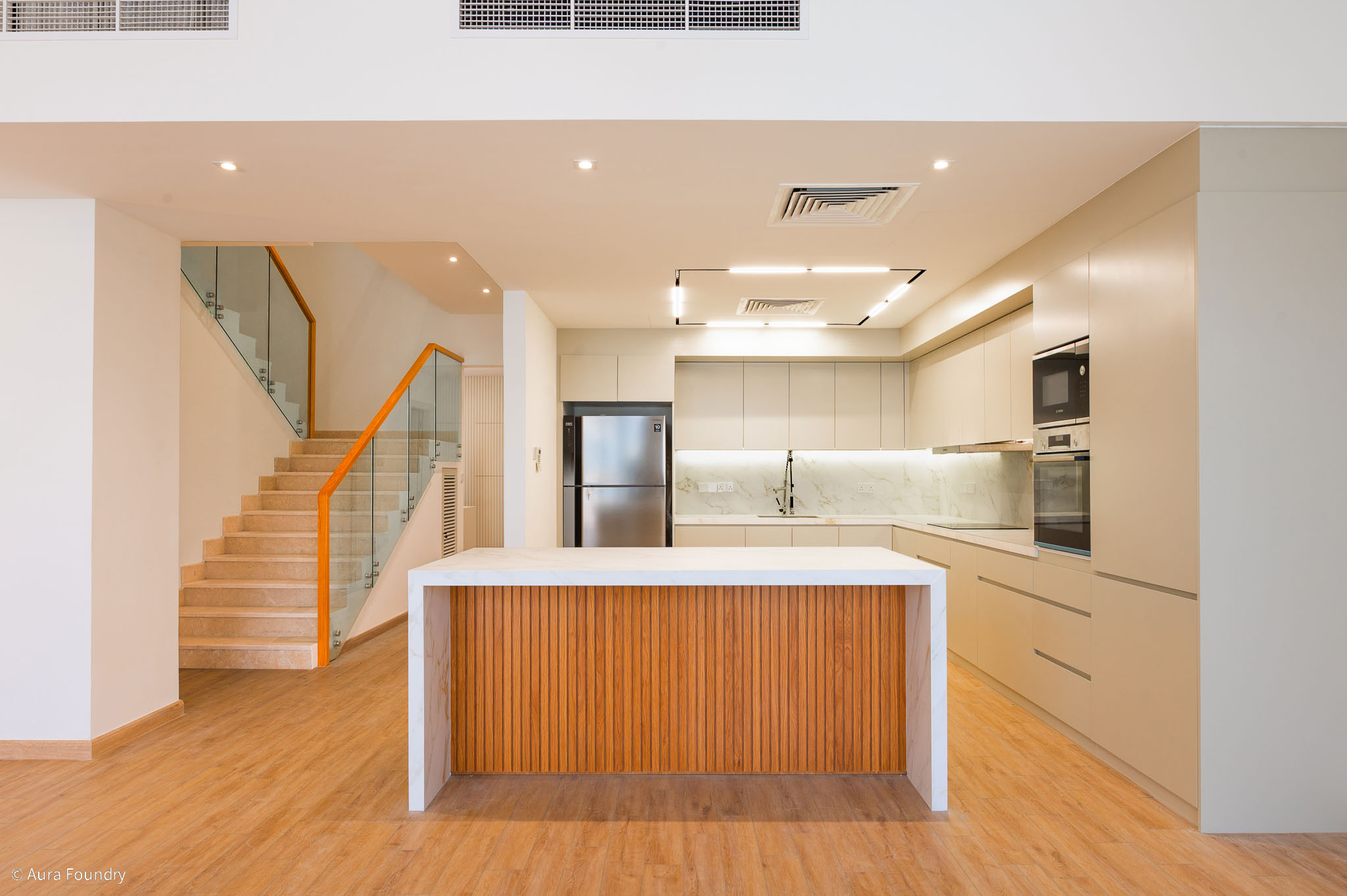
Renders are the designer's imagination. Finished photos are evidence of execution. A designer who can only show renders has either not built much or doesn't have the confidence to show how the execution compared. Either way, that's useful information.
Gives references willingly.
"Let me check with the client" is a hedge. A designer who is proud of their work and has good client relationships can connect you within a day or two. If it doesn't happen, notice that.
Answers pricing questions directly.
Ask how much a 2BHK project costs. If the answer is a 10-minute non-answer full of variables and "it depends," that's either a lack of experience or a reluctance to set expectations. Both should give you pause. Honest designers have honest ranges.
Has written contracts and scopes.
Not email threads. Not verbal understandings. Actual documents. This is not about distrust — it's about professionalism. A designer who works on handshake agreements is a designer whose accountability mechanisms are unclear.
Doesn't pressure a deposit before showing you anything.
Legitimate designers close on the strength of their work and clarity of their process. High-pressure or urgency-based closes ("book now, I only have one more slot") are a sales technique, not a design quality signal.
Red Flags
Render-only portfolio — If you can't see a single finished photo in their portfolio, treat it as a render studio, not a design studio.
Vague about inclusions — "We handle everything" with no specifics is not a scope. Ask what's included and what isn't, line by line. Vagueness about scope is vagueness about accountability.
Large upfront deposit before work begins — 30-40% upfront before they've shown you a single design direction is a capital risk to you, not a design commitment from them.
Can't explain design decisions — "This looks good" is not a design decision. "We raised the sofa level and used a continuous rug to anchor the seating zone because you have a long, narrow hall and this will create a sense of purpose at the far end" — that's a designer thinking for you.
The First Meeting Test
Here's what I've come to believe: the first meeting tells you almost everything.
Does the designer ask more questions than they pitch? Do they want to understand your life before proposing solutions? Do they listen when you say something doesn't feel right, or do they argue for their vision?
A designer who is genuinely on your side listens first. A designer who is primarily selling listens only enough to find an opening. You can feel the difference.
The Render-vs-Reality Test
Ask to see a before-and-after for a single room — render on one side, finished photo on the other. This one comparison tells you more about a designer's execution quality than ten finished photos alone. Read about why 3D renders matter so much to understand what you're evaluating.
See our render-vs-reality comparisons — book a call and we'll walk you through them →

Book a Free Home Visit & Sketch
We visit your home, spend 60–90 minutes thinking about your space, and leave you with a hand-drawn concept sketch — free, no strings attached.
More Articles
.jpg)
Interior Designer vs Turnkey Contractor Pune
Turnkey contractors in Pune quote low and move fast. Interior designers charge a design fee and take longer. Here's what you actually get for the difference — and when each makes sense.
Do I Need to Hire an Interior Designer or Can I DIY?
The honest answer to a question most Pune homeowners ask themselves — when a designer is worth it and when you're genuinely fine going it alone.