What to Ask Your Interior Designer Before Signing in Pune — 12 Questions That Matter
3 November 2026 · 6 min read
Ali Asgar Shabbir, Principal Designer at Aura Foundry Interiors, has been on both sides of this conversation — as the designer being interviewed and as someone who has interviewed contractors and vendors. These are the questions that actually reveal what a working relationship will look like.
Why This Matters More Than the Portfolio
A designer's portfolio tells you what they're capable of at their best. It doesn't tell you:
- Whether they'll show up for site visits
- How they handle mistakes
- Whether their quoted price is what you'll actually pay
- Who is specifically responsible for your project day to day
- What happens when you disagree on something
The interview is where you find out. Most homeowners in Pune skip it — or ask surface questions and then decide based on personality. The result is a surprise, sometimes a bad one, three months into execution.
Here are 12 questions that cut through the portfolio and get to what matters.
Before the Work Starts
1. "Who specifically will be managing my project day to day?"
At a large platform like Livspace or DesignCafe, the designer you meet in the showroom is often not the one who manages your project. It gets handed off to a junior designer or project coordinator.
At a boutique studio, the answer should be: the principal designer you're sitting with right now.
Red flag: "We'll assign one of our experienced designers." This means you don't know who you're getting.
2. "Can I see completed project photos — not renders — from a project similar to mine in scope and budget?"
Renders are aspirational. Completed photos are reality. Ask specifically for photos of finished projects, not CGI. Ask if you can speak to a past client, or visit a completed project.
Red flag: Only renders available, or photos that look like they came from a catalogue rather than an actual home.
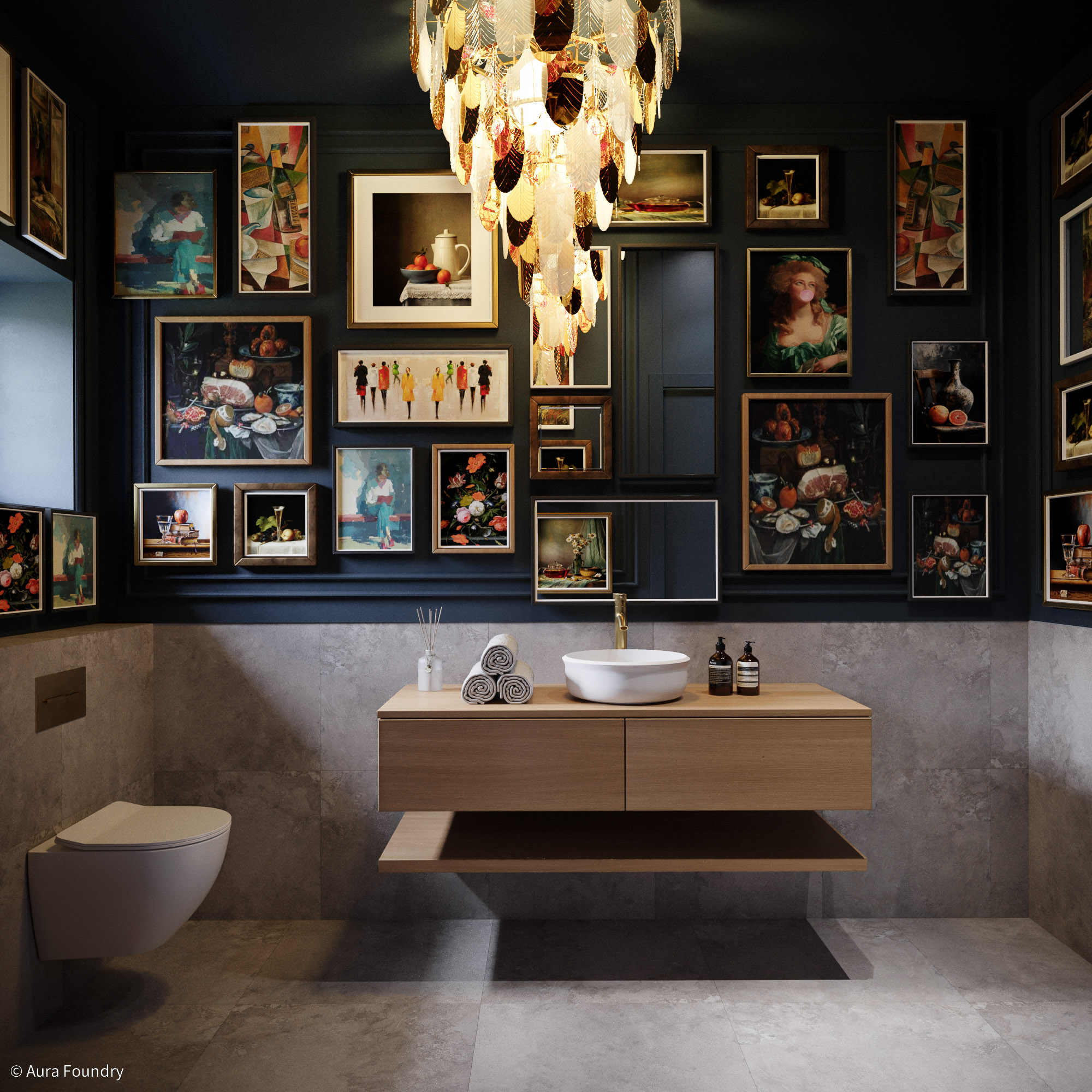
3. "What does your 3D visualisation process look like — and can I see a render next to the finished result from the same project?"
This tells you two things: how accurate their visualisation is, and how closely the execution matched the plan. A designer who can put a render and a finished photo side by side — and they look nearly identical — is a designer who visualises and executes with precision. See why 3D renders matter so much before any work begins.
Red flag: 3D renders that look nothing like the finished photos, or a designer who doesn't offer renders at all.
4. "Walk me through your process from first meeting to handover."
A good designer will describe a clear sequence: site visit, brief, space planning, 3D renders, material selection, vendor briefing, execution, snag list, handover. They'll have a name for each phase and know how long each takes.
Red flag: A vague answer — "we just start and figure it out as we go." This is not a process. It's an invitation for scope creep and disputes.
About the Quote
5. "Is this quote all-inclusive, or are there items not covered?"
The most common source of surprise bills in Pune interior projects: a quote that looks complete but excludes civil work, electrical, painting, loose furniture, or "site conditions." Ask the designer to list what's in the quote and what's not.
Red flag: Reluctance to clarify what's excluded. "We'll handle everything, don't worry" is not an answer.
6. "What happens if we discover something unexpected during execution — a plumbing issue, a structural problem — that wasn't in the original scope?"
This will happen. The question is how it's handled. A good designer has a clear answer: they'll give you a written change order before proceeding, you'll approve it before any additional cost is incurred.
Red flag: "We'll figure it out then" or a defensive response to the question itself.
7. "What payment structure do you use, and what are the milestones?"
Standard practice is milestone-based payments — a percentage at signing, a percentage at design delivery, percentages tied to execution milestones, and a final payment at handover. Never pay 100% upfront.
Red flag: Large advance payment required before design work begins, or vague payment terms with no written milestone structure.
During Execution
8. "How often do you visit the site during execution, and who attends those visits?"
For a 2 BHK project, a designer should be visiting at least once a week during active execution phases. They should attend critical milestones in person: when the electrical is being run, when the woodwork goes in, when tiling begins.
Red flag: "Our site supervisor handles day-to-day, I check in periodically." If the person you're hiring won't be on site regularly, you're not getting what you're paying for.
9. "How do you communicate with clients during execution — and what's the typical response time?"
WhatsApp is the standard in Pune. The question is whether there's a structured update rhythm or whether you'll be chasing them for updates.
Red flag: No clear answer, or stories about communication being reactive rather than proactive.
10. "What's your process when I'm not happy with something during execution?"
This tests how they handle conflict. A confident, experienced designer will say something like: "We review it together on site, identify what went wrong, and fix it — at whose cost depends on whether it was a design decision, a contractor error, or a client change of mind. Each case is handled differently, but always in writing."
Red flag: Defensiveness, minimising the concern, or a vague promise that "we'll make it right."
At the End
11. "Do you handle the snag list, and what does handover look like?"
A snag list is a checklist of small defects and unfinished items identified at the end of execution. A good designer produces this systematically, ensures each item is addressed, and hands the project over formally — not just hands over keys and disappears.
Red flag: "What's a snag list?" or handover described as "just moving in when work is done."
12. "After handover, what support is available if something fails?"
Woodwork joints, hardware, tile grout — things fail in the months after handover. What's the process? Who does the homeowner call?
Red flag: No clear answer, or a response that implies the relationship ends at handover.
The Question to Ask Yourself After the Meeting
*"Did this designer push back on anything I said — or did they agree with everything?"*
A designer who challenges your ideas ("that layout won't work because of the column position", "that material choice will show wear in your kitchen context") is a designer who is actually thinking about your project. A designer who agrees with everything is telling you what you want to hear.
The one who says "no, and here's why" is usually the better hire.
These Are the Questions We Welcome
At Aura Foundry, we're asked versions of most of these in our first meetings. We welcome them. The clients who ask the hard questions are usually the most rewarding to work with — because they're serious about the outcome.
Ali Asgar Shabbir handles every Aura Foundry project personally, from first visit to final walkthrough. If you'd like to put these questions to us directly, book a free home visit or call +91 9172 907253.
Related Reading

Book a Free Home Visit & Sketch
We visit your home, spend 60–90 minutes thinking about your space, and leave you with a hand-drawn concept sketch — free, no strings attached.
More Articles
.jpg)
Interior Designer vs Turnkey Contractor Pune
Turnkey contractors in Pune quote low and move fast. Interior designers charge a design fee and take longer. Here's what you actually get for the difference — and when each makes sense.
Do I Need to Hire an Interior Designer or Can I DIY?
The honest answer to a question most Pune homeowners ask themselves — when a designer is worth it and when you're genuinely fine going it alone.