.jpg)
How Do Designers Source Furniture and Materials?
7 June 2026 · 5 min read
One of the questions clients rarely ask upfront — and often wish they had asked — is: how does your designer actually source the materials for my project, and what does that mean for my budget? Use our free budget estimator to understand what different material quality tiers cost before this conversation.
Designer Vendor Networks
Established designers in Pune have built relationships with suppliers over years. These relationships typically translate into 15-30% better pricing than you'd get walking into the same showroom as a retail customer. Contractors and designers who buy in volume, who bring repeat business, and who refer their clients consistently get trade pricing.
This is a genuine benefit of working with an experienced designer. Their vendor network is part of what you're paying for.
The Markup Question
Here's something that should be transparent but often isn't: some designers add a margin to vendor prices before passing them to clients.
This is a legitimate business practice — designers justify it as a sourcing fee for the time spent coordinating vendors. But it should be disclosed. If a designer is buying a tile at ₹80/sqft and billing you at ₹110/sqft, you should know that's the model.
Ask directly: are vendor prices passed through to me at cost, or is there a margin added? A designer who can't give you a clear answer is giving you an answer.
Pune-Specific Sourcing
For clients in Undri and south Pune more broadly, here's where materials actually come from:
Tiles and flooring: Hadapsar has the highest concentration of tile showrooms in Pune — brands like Kajaria, Somany, and Asian Granito all have presence there. You'll find better selection there than anywhere in south Pune.
Hardware (kitchen and wardrobe): Aundh and Baner have the better hardware suppliers — Häfele, Hettich, and Blum dealers. Hardware quality is where modular kitchens diverge most sharply in the ₹1.5L to ₹4L price range.
Loose furniture: Swargate has traditional furniture markets. Decathlon and HomeTown cover the mid-range. For quality contemporary furniture, Wooden Street and Urban Ladder are where most Pune clients end up for sofas and beds.
Plywood and carpentry materials: suppliers in Hadapsar and Kondhwa for the main execution contractors.
Custom Fabrication vs Catalogue
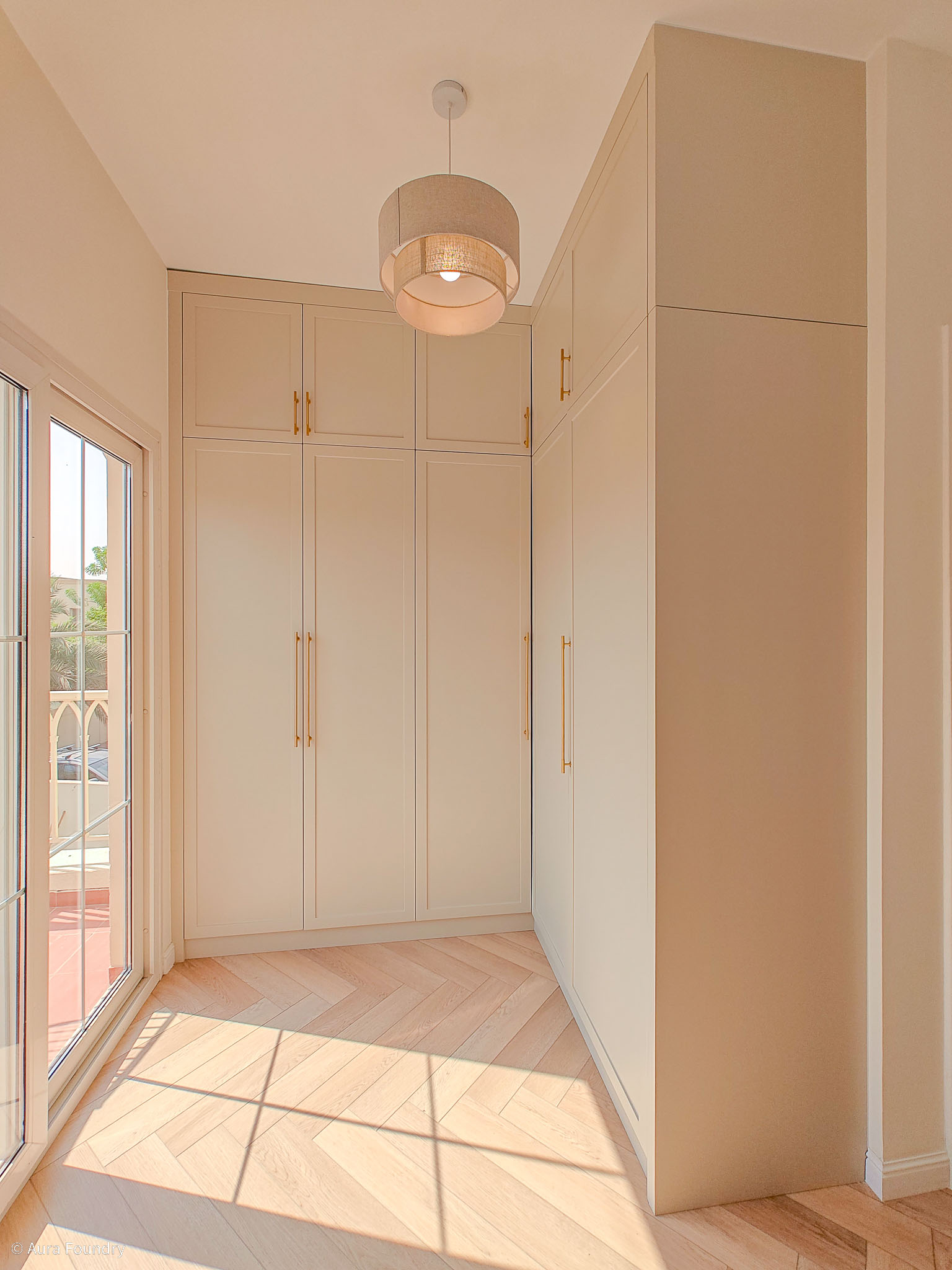
Custom fabrication — built on-site by a carpenter to a designer's drawing — makes sense for: fixed storage, TV units, kitchen shutters, wardrobes, and any furniture that needs to fit unusual dimensions.
Catalogue furniture makes sense for: sofas, dining tables, accent chairs, pendant lights — anywhere standard sizes work and where getting the right aesthetic off the shelf is simpler than fabricating.
Most projects are a mix of both. The design determines which is which.
Aura Foundry's Policy
At Aura Foundry: pass-through vendor pricing, no markup, transparent. You pay exactly what I pay my vendors. My fee is my fee — it's not embedded in the material costs. This means you can verify any vendor invoice against what you're charged, and there are no surprises.

Book a Free Home Visit & Sketch
We visit your home, spend 60–90 minutes thinking about your space, and leave you with a hand-drawn concept sketch — free, no strings attached.
More Articles
.jpg)
How Long Does Interior Design Take in Pune?
From first call to final handover — the realistic week-by-week timeline for a 2 BHK interior design project in Pune in 2026, and the most common reasons projects run late.
How Long Does Interior Design Take in Pune
Most Pune homeowners underestimate how long a good interior takes. Here's the honest week-by-week timeline from first call to final handover — and what causes delays.